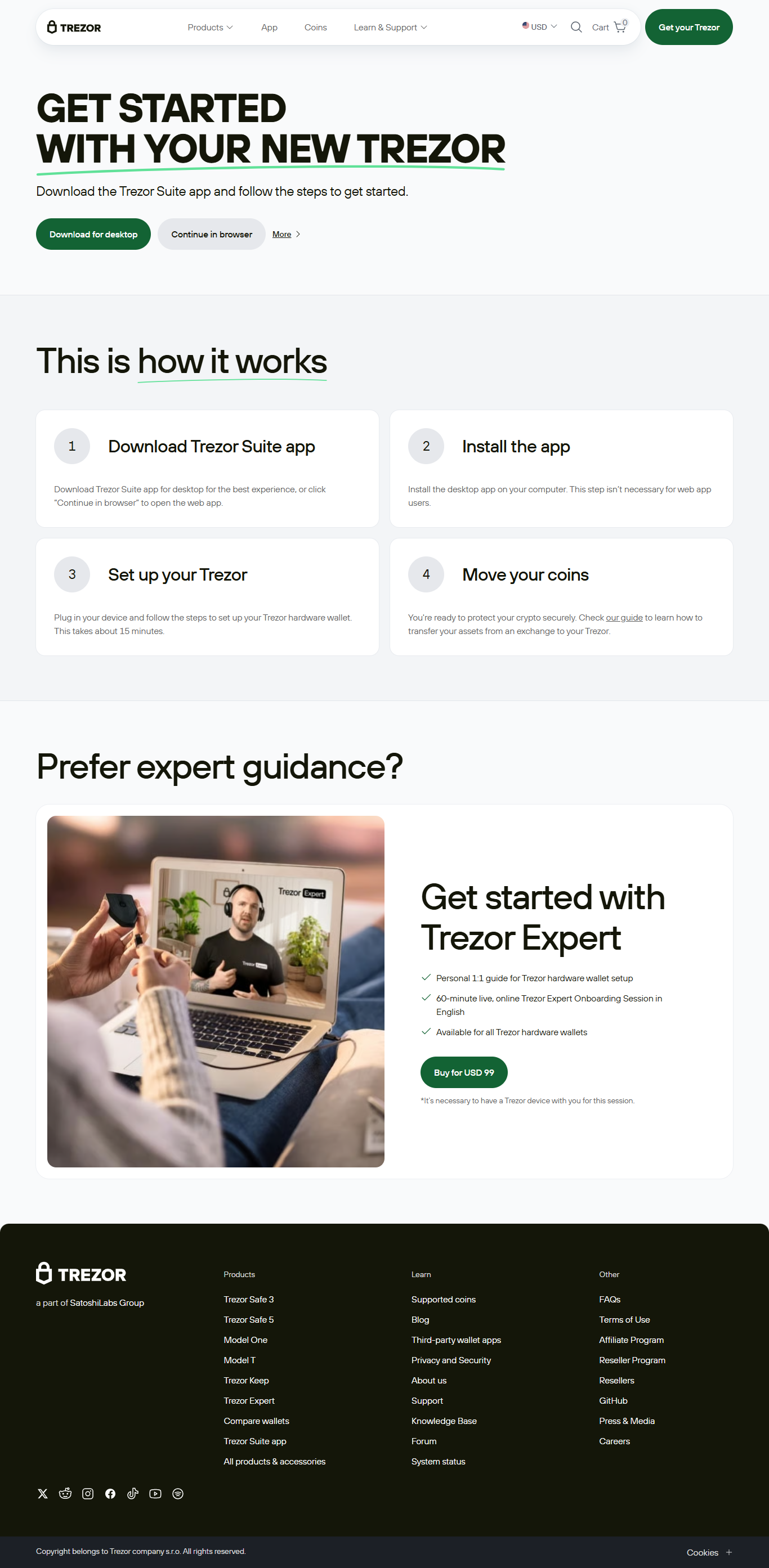
Trezor.io/start Setup | Official Hardware Wallet Guide
Introduction
Securing cryptocurrency begins with one essential principle: you must control your private keys. Hardware wallets are widely regarded as the safest way to achieve this, and Trezor stands as one of the most trusted names in the industry. To ensure every user starts safely and correctly, Trezor provides an official onboarding page: Trezor.io/start.
The Trezor.io/start setup process is designed to guide users step by step through initializing their Trezor hardware wallet, installing the required software, generating a secure recovery seed, and learning best security practices. Whether you are new to crypto or upgrading your security setup, following this official guide is critical for protecting your digital assets.
This article provides a complete overview of the Trezor.io/start setup, explaining each step, its purpose, and how it helps you maintain full control over your cryptocurrency.
What Is Trezor.io/start?
Trezor.io/start is the official setup portal for all Trezor hardware wallets. It acts as the single trusted entry point for:
Installing Trezor Suite
Connecting your Trezor device
Verifying device authenticity
Creating or restoring a wallet
Generating and securing a recovery seed
Using the official setup page helps protect users from phishing attacks, fake software, and malicious downloads that could compromise wallet security.
Why Using the Official Setup Page Matters
The crypto ecosystem is a common target for scams. Fake wallet software and look-alike websites often attempt to trick users into revealing their recovery seed. Using Trezor.io/start ensures:
You download authentic Trezor software
Your device firmware is verified
You follow best-practice security procedures
Your recovery seed is generated offline
Skipping the official setup or following unofficial guides significantly increases the risk of asset loss.
What You Need Before Starting
Before beginning the Trezor.io/start setup, make sure you have:
A genuine Trezor hardware wallet (Model One, Model T, or newer models)
A computer or supported mobile device
A USB cable (included with the device)
Pen and paper (for writing your recovery seed)
A private, distraction-free environment
Never photograph or store your recovery seed digitally.
Step 1: Visit Trezor.io/start
The first step is navigating directly to trezor.io/start using a trusted browser. Always check:
Correct spelling of the domain
Secure HTTPS connection
No pop-ups requesting recovery phrases
This page automatically detects your device model and provides the correct setup instructions.
Step 2: Download and Install Trezor Suite
Trezor Suite is the official software interface for managing your hardware wallet. From the setup page, you’ll be prompted to install Trezor Suite for your operating system:
Windows
macOS
Linux
Trezor Suite allows you to:
Manage assets
Send and receive crypto
Track portfolio balances
Update firmware
Adjust privacy and security settings
Once installed, launch Trezor Suite and connect your hardware wallet.
Step 3: Connect Your Trezor Device
Using the supplied USB cable, connect your Trezor device to your computer. Trezor Suite will automatically detect the device and guide you through the next steps.
At this stage, the software will:
Check whether firmware is installed
Verify the authenticity of the device
Prompt firmware installation if required
New devices are shipped without active firmware for security reasons.
Step 4: Install and Verify Firmware
Firmware is the operating system of your Trezor device. Installing it during setup ensures:
You are using official, untampered firmware
The device has not been compromised
Security features are fully enabled
You must confirm firmware installation directly on the Trezor device, preventing remote tampering.
Step 5: Create a New Wallet or Restore an Existing One
Once firmware is installed, you can choose between:
Create a New Wallet
This option generates a brand-new wallet with unique private keys stored securely inside the device.
Restore an Existing Wallet
If you already have a recovery seed from a previous wallet, you can restore access by entering the seed during setup.
For new users, creating a new wallet is the recommended option.
Step 6: Generate and Secure Your Recovery Seed
The most important step in the Trezor.io/start setup is generating your recovery seed.
What Is a Recovery Seed?
A recovery seed is a list of 12, 18, or 24 words generated offline by your Trezor device. It is the only backup of your wallet.
Why It Matters
It restores access if your device is lost or damaged
Anyone with the seed can access your crypto
Trezor cannot recover it for you
Best Practices
Write the words down in the exact order
Never store digitally
Never share with anyone
Keep in a fireproof, waterproof location
Consider multiple secure storage locations
Trezor will ask you to confirm selected words to ensure accuracy.
Step 7: Set a PIN Code
After securing your recovery seed, you will set a PIN code.
The PIN:
Protects your device from unauthorized access
Is required every time the device is connected
Uses randomized keypad positions to prevent keylogging
Choose a strong PIN that is hard to guess but easy for you to remember.
Optional Step: Enable Passphrase Protection
Advanced users can enable passphrase protection, which adds an extra word to your recovery seed.
Benefits:
Creates hidden wallets
Adds plausible deniability
Enhances protection against physical threats
Each passphrase generates a completely separate wallet. Losing the passphrase means losing access to that wallet permanently.
Step 8: Access the Trezor Suite Dashboard
Once setup is complete, you’ll enter the Trezor Suite dashboard where you can:
Enable cryptocurrencies
View wallet addresses
Send and receive assets
Track portfolio performance
Adjust privacy settings
Enable Tor for anonymous connections
All sensitive actions require physical confirmation on the device.
Security Principles Behind Trezor.io/start
The setup process is built around several core principles:
Self-Custody
Only you control your private keys.
Offline Security
Private keys never leave the device.
Physical Verification
Every transaction must be confirmed on the device.
Transparency
Open-source software allows public security audits.
Common Setup Mistakes to Avoid
Entering your recovery seed on a website
Downloading software from unofficial sources
Skipping firmware verification
Taking photos of the recovery seed
Using weak PIN codes
Setting up the device in public spaces
Avoiding these mistakes is just as important as completing the setup itself.
Who Should Use Trezor.io/start?
Beginners
Clear instructions and guided steps reduce mistakes.
Long-Term Investors
Cold storage security is ideal for holding assets safely.
Active Traders
Secure transaction signing protects funds during frequent use.
Privacy-Focused Users
Advanced privacy tools and passphrase wallets provide enhanced control.
Trezor.io/start and Long-Term Security
Setting up your wallet correctly is only the beginning. Long-term security also involves:
Keeping firmware updated
Verifying transaction details on the device
Safeguarding your recovery seed
Staying alert to phishing attempts
Using official Trezor resources only
Your hardware wallet is only as secure as your habits.
Conclusion
The Trezor.io/start setup is more than just an installation guide—it’s the foundation of secure cryptocurrency ownership. By following the official steps, users ensure their hardware wallet is authentic, properly configured, and protected from the most common threats in the crypto space.
In a decentralized world where there is no reset button, proper setup is everything. Trezor.io/start empowers users to take full responsibility for their digital assets while providing the tools and guidance needed to do so safely.
If you value true ownership, privacy, and security, starting your journey at Trezor.io/start is the right first step.